
Jackson County Bench Warrants Explained
A bench warrant comes straight from the bench rather than from a new complaint, and that difference shapes everything about it. Minnesota court guidance points to the usual causes: a missed court date, a violated sentence term, or a warrant filed together with a criminal complaint. The judge who signs it controls it from start to finish, and only that judge can recall it. In Jackson County, this is where many people get stuck. The date passes, notice goes to an old address, and the case simply sits. Nothing fixes itself here. The warrant stays active in the record until somebody brings the matter back before a judge, so waiting quietly is the one approach guaranteed to fail.
What Triggers a Warrant in Jackson County
Several things can trigger a warrant in Jackson County, and they don't all carry the same weight. State materials back this list, though no two cases follow it exactly.
- A missed criminal or traffic court appearance
- No response to a citation or summons after the required notice
- A violation of sentence terms, probation, or release conditions
- Noncompliance with a family or child-support order where the court has authority
- A warrant filed with a criminal complaint after a probable-cause review
- A mailed summons returned undeliverable in a sign-and-release situation
How Jackson County Bench Warrants Are Issued
Issuance works in two steps. Under Rule 4, a prosecutor or officer brings a complaint, and a judge weighs probable cause. Under Rule 3, the warrant must name the defendant, state the offense, set bail or release conditions where required, and direct a prompt appearance. The judge signs. An authorized officer then executes it. The state publishes the full text of Rule 3 for anyone who wants to read those requirements directly.
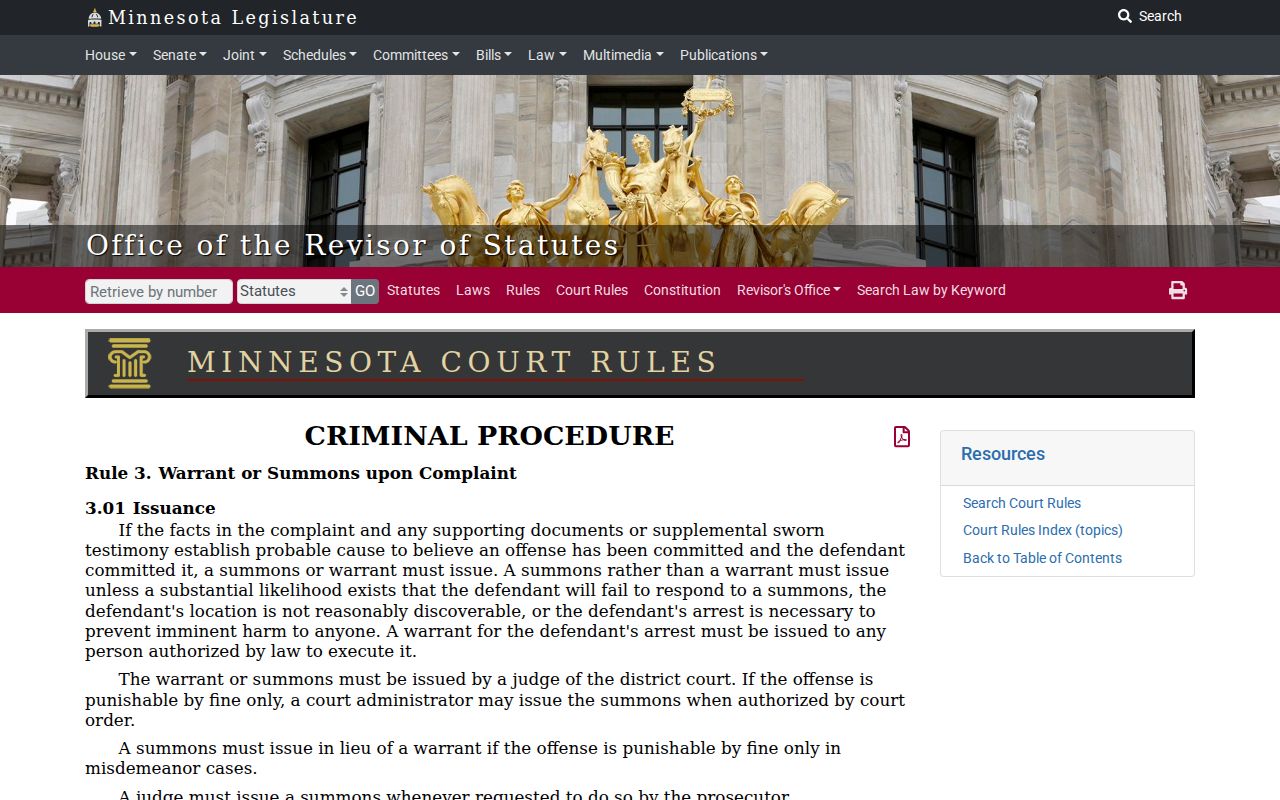
The rule also sets how fast someone arrested on the warrant must go before a judge.
Jackson County Sign-and-Release Warrants
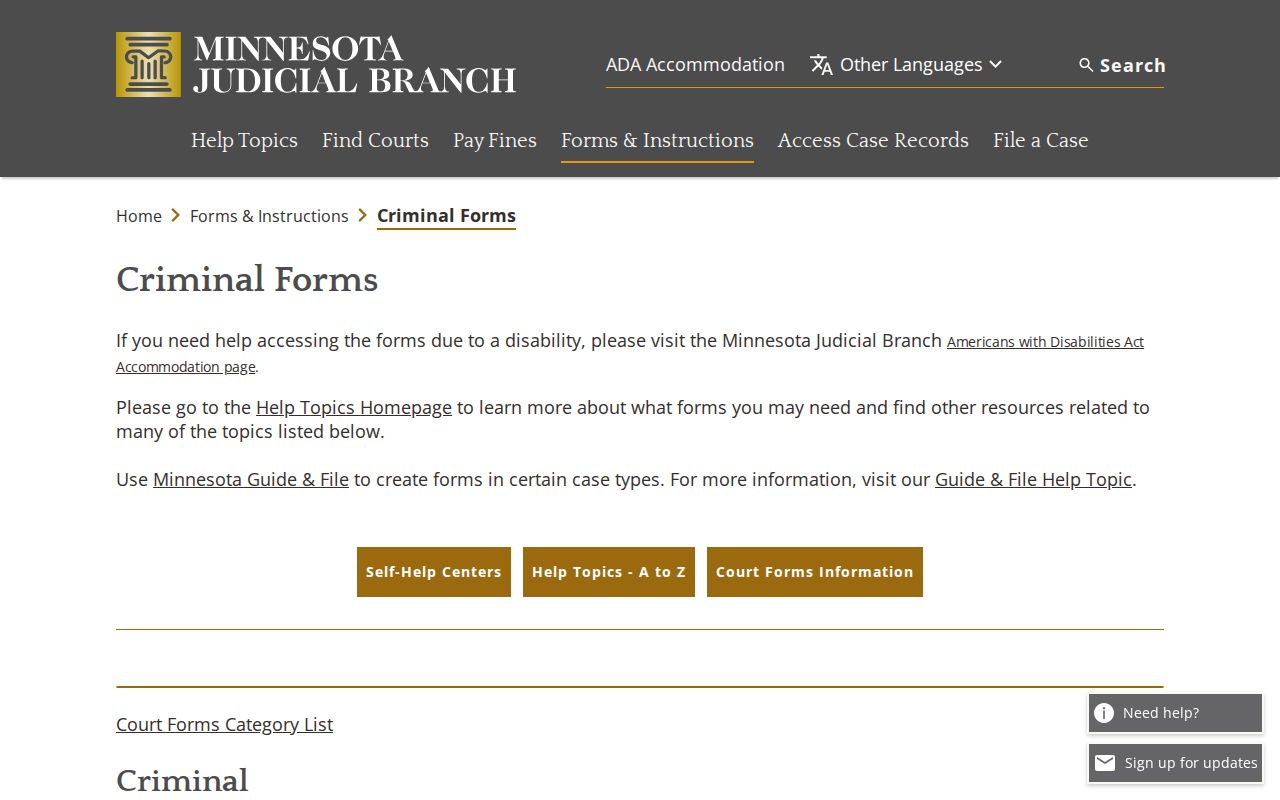
Minnesota has one warrant type that works differently. Under Minnesota Statutes 629.415, a first missed misdemeanor or gross-misdemeanor date after a mailed summons comes back undeliverable can produce a sign-and-release warrant. When the statute's conditions fit, it authorizes no arrest and requires no bail. The officer hands over notice and a new appearance date instead. The state's criminal forms index lists the form that goes with this process.
Ask the Jackson County court which type the file shows. The two get discussed in the same breath yet handled very differently.
Bench Warrants and Arrest Warrants Compared
The two labels blur in conversation but not in the record. Read the warrant and the case events before assuming which one you face in Jackson County.
| Point | Bench Warrant | Arrest Warrant |
|---|---|---|
| What starts it | A missed obligation or a violated order | A criminal charge after a probable-cause review |
| Who brings it | The judge acts on a case already open | A prosecutor or officer presents a complaint |
| First sign | A court notice or a letter | A charge, a citation, or a police contact |
| Who ends it | The judge, by recall or a new date | The judge, with release conditions attached |
Policy 503 and Jackson County Warrants
One district rule catches people who try to postpone their way out. Fifth Judicial District Policy 503 requires a continuance request to be written, signed, and supported by good cause. It also says no continuance request gets considered while the requesting party has an active warrant. Exceptions exist, mostly for early-stage proceedings. Asking Jackson County for a new date never clears the warrant itself.
Resolving a Jackson County Bench Warrant
Everything runs through the issuing court. Call Court Administration in Jackson County and ask what the case requires. The answer might be an appearance, a bond, a payment, or a motion filed by an attorney. Minnesota guidance suggests contacting the sheriff's office where the charge was filed, calling or going to the court, and talking with a lawyer.
Caution: Appearing in person while a warrant is active can result in custody, so ask about bail and timing before traveling to the courthouse.
After any court action, confirm the result in the Register of Actions or ask Court Administration to verify the recall. A bond can settle custody while the underlying charge stays open.
Before Appearing: What to Ask First
A phone call settles most practical questions. Ask whether the case needs an appearance or paperwork. Ask whether bail has been set, and in what form. Ask whether an attorney can appear for you, and how long the process takes once it starts. Court staff cannot give legal advice, so strategy belongs with a lawyer. Jackson County publishes no walk-in warrant hours, which makes calling ahead the only reliable approach.
Finding the Court That Issued the Warrant
One district-court location covers everything here. Minnesota's unified system assigns criminal, traffic, juvenile, family, civil, and probate cases filed in Jackson County to the Minnesota District Court at the Jackson County Courthouse, in the Fifth Judicial District. Any page steering you toward a city court or a justice of the peace is describing some other state's setup. Court Administration keeps the records, handles certified copies, and answers procedural questions. Family and child-support matters sit inside the same structure, though party and address data may carry restrictions.
Calling the Court, Not a City Hall
City halls in Jackson, Lakefield, Heron Lake, Okabena, and Alpha handle municipal business, not court records. None of them can confirm or recall a Jackson County bench warrant. The district court sits at 405 Fourth Street in Jackson. Court Administration answers at 507-800-7003 on weekdays from 8:00 a.m. to 4:30 p.m. For service and custody questions, the sheriff's non-emergency line is 507-847-4420.